
Ayurvedic Treatment for Back Pain: Natural Relief for Spine Health (Complete 2026 Guide)
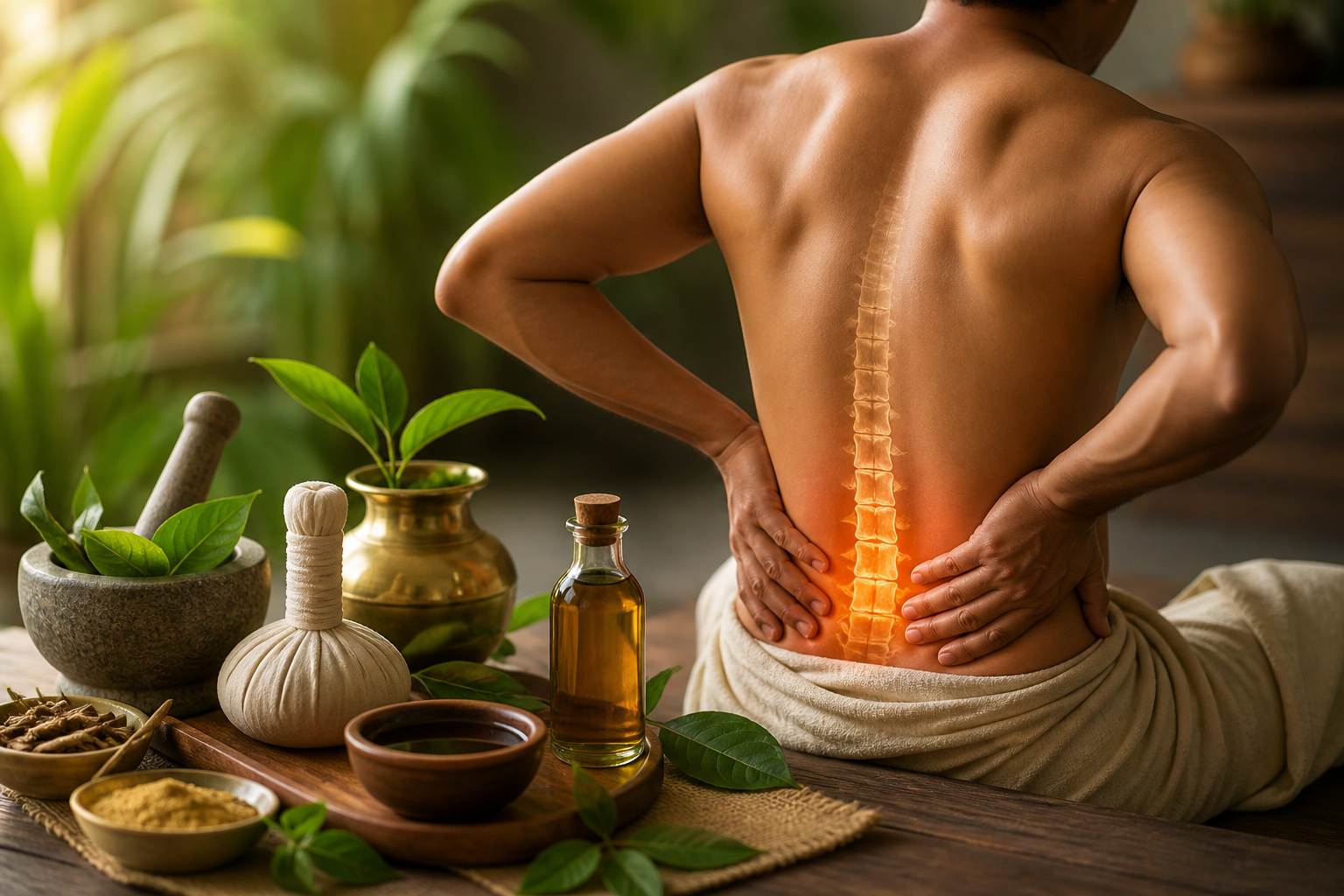
Back pain is one of the most common musculoskeletal problems affecting people across all age groups. It can range from mild stiffness due to poor posture to chronic spinal conditions that limit daily movement and quality of life.
While painkillers and conventional treatments often focus on temporary relief, many individuals are now turning toward Ayurvedic treatment for back pain as a natural, long-term approach that supports spinal health, reduces inflammation, and improves mobility.
Ayurvedic Treatment for Back Pain Explained
Ayurvedic treatment for back pain focuses on balancing Vata dosha, improving spinal lubrication, reducing toxin accumulation (Ama), and strengthening muscles and nerves through herbal oils, Panchakarma detox therapies, diet correction, and lifestyle changes.
What is Back Pain?
Back pain refers to discomfort in the upper, middle, or lower spine caused by muscle strain, nerve compression, or spinal degeneration.
- Common Symptoms:
- Stiffness in the back
- Sharp or dull spinal pain
- Restricted movement
- Muscle tightness
- Pain worsened by sitting or bending
Back pain can be:
- Acute (short-term)
- Chronic (long-term)
Ayurvedic Understanding of Back Pain (Vata Imbalance)
In Ayurveda, back pain is primarily linked to Vata dosha imbalance, which controls movement, nerve impulses, and joint function.
When Vata becomes aggravated, it causes:
- Dryness in joints
- Reduced lubrication
- Muscle stiffness
- Nerve sensitivity
- Pain and restricted movement
Root Causes (Ayurvedic Viewpoint)
- Weak digestion (Agni imbalance)
- Accumulation of toxins (Ama)
- Sedentary lifestyle
- Stress and anxiety
- Poor posture or overexertion
Ayurveda treats back pain as a systemic imbalance, not just a structural issue.
How Ayurvedic Treatment for Back Pain Works
Ayurveda uses a 3-level healing system:
1. Shamana (Symptom Relief)
Reduces pain and inflammation using herbs and oils
2. Shodhana (Detoxification)
Removes toxins using Panchakarma therapies
3. Brimhana (Rejuvenation)
Strengthens muscles, nerves, and spinal tissues
Best Ayurvedic Treatments for Back Pain
1. Herbal Oils (External Therapy)
Used widely in Ayurveda for back pain relief.
Key Oils:
- Mahanarayana Taila → Improves joint flexibility
- Dhanwantharam Taila → Strengthens nerves and muscles
Benefits:
- May help reduce stiffness
- Supports circulation
- Relaxes muscles
2. Herbal Medicines (Internal Support)
- Ashwagandha → Supports muscle strength & stress balance
- Shallaki (Boswellia) → Traditionally used for inflammation support
- Guggulu formulations → Support joint and bone health
Prescribed based on body constitution (Prakriti)
3. Kati Basti (Most Effective Local Therapy)
One of the most recommended therapies for lower back pain Ayurvedic treatment.
Procedure:
Warm medicated oil is retained on the lower back using a herbal dough ring.
Benefits:
- May support pain relief
- Improves spinal flexibility
- Nourishes nerves
- Relaxes deep muscles
4. Abhyanga (Oil Massage Therapy)
- Improves blood circulation
- Relaxes muscle tension
- Supports stress reduction
- Enhances nervous system balance
5. Panchakarma Therapy (Deep Detox)
Recommended for chronic or recurring cases.
Key Procedures:
- Basti → Balances Vata dosha
- Virechana → Helps detoxification
Best suited for long-term spinal issues
6. Swedana (Herbal Steam Therapy)
- May reduce stiffness
- Improves flexibility
- Supports pain relief
Diet for Back Pain (Vata-Balancing Food Plan)
Recommended:
- Warm, freshly cooked meals
- Turmeric, ginger, garlic
- Whole grains (millets, rice)
- Ghee and healthy fats
Avoid:
- Cold/refrigerated foods
- Processed food
- Excess caffeine
- Refined sugar
Lifestyle & Yoga for Spine Health
Healthy Habits:
- Maintain correct posture
- Avoid long sitting hours
- Follow consistent sleep routine
- Reduce stress levels
Recommended Yoga:
- Bhujangasana (Cobra Pose)
- Makarasana (Crocodile Pose)
- Cat-Cow Stretch
Who Can Benefit?
- Office workers with posture-related pain
- Chronic back pain patients
- Stress-induced muscle stiffness cases
- People preferring natural non-invasive care
Limitations
Results are gradual, not instant
- Requires consistency and discipline
- Not suitable for emergency spinal conditions
- Should be guided by professionals
- Ayurveda works best as a long-term supportive system
How Long Does Ayurveda Take?
- Mild cases: 2–4 weeks
- Moderate cases: 1–3 months
- Chronic cases: 3+ months
Benefits of Ayurvedic Treatment for Back Pain
| Benefit | Description |
| Root-cause approach | Treats Vata imbalance |
| Natural healing | Uses herbs and oils |
| Long-term relief | Improves spinal strength |
| Preventive care | Reduces recurrence risk |
Why Choose Ayurveda in Kerala?
Kerala is globally recognized for authentic Ayurveda due to:
- Traditional Panchakarma expertise
- High-quality herbal formulations
- Experienced practitioners
Clinical Support
At Fair Pharma, Ayurvedic treatment for back pain is designed based on individual body constitution and pain severity. With a focus on herbal support, diet, and lifestyle correction, the approach aims to provide safe, long-term relief. Early consultation can help manage symptoms effectively and improve overall spinal health.
Conclusion
Ayurvedic treatment for back pain offers a natural and sustainable approach by addressing root causes such as Vata imbalance, toxin accumulation, and lifestyle factors. With consistent herbal support, proper diet, and healthy daily habits, it can help improve mobility, reduce discomfort, and support long-term spine health.
FAQs
How effective is Ayurvedic treatment for back pain?
It may help manage pain by addressing Vata imbalance, stiffness, and toxin buildup when followed consistently.
What is the best Ayurvedic therapy for back pain?
Kati Basti is widely considered one of the most effective therapies.
How long does Ayurvedic treatment take?
Results vary from a few weeks to months depending on severity.
Can Ayurveda replace painkillers?
It may reduce dependency in many cases, but medical supervision is important.
Is Panchakarma necessary for back pain?
It is recommended for chronic or recurrent cases under expert guidance.