
Ayurvedic Approach to Metabolism: Daily Habits for Healthy Cholesterol Balance
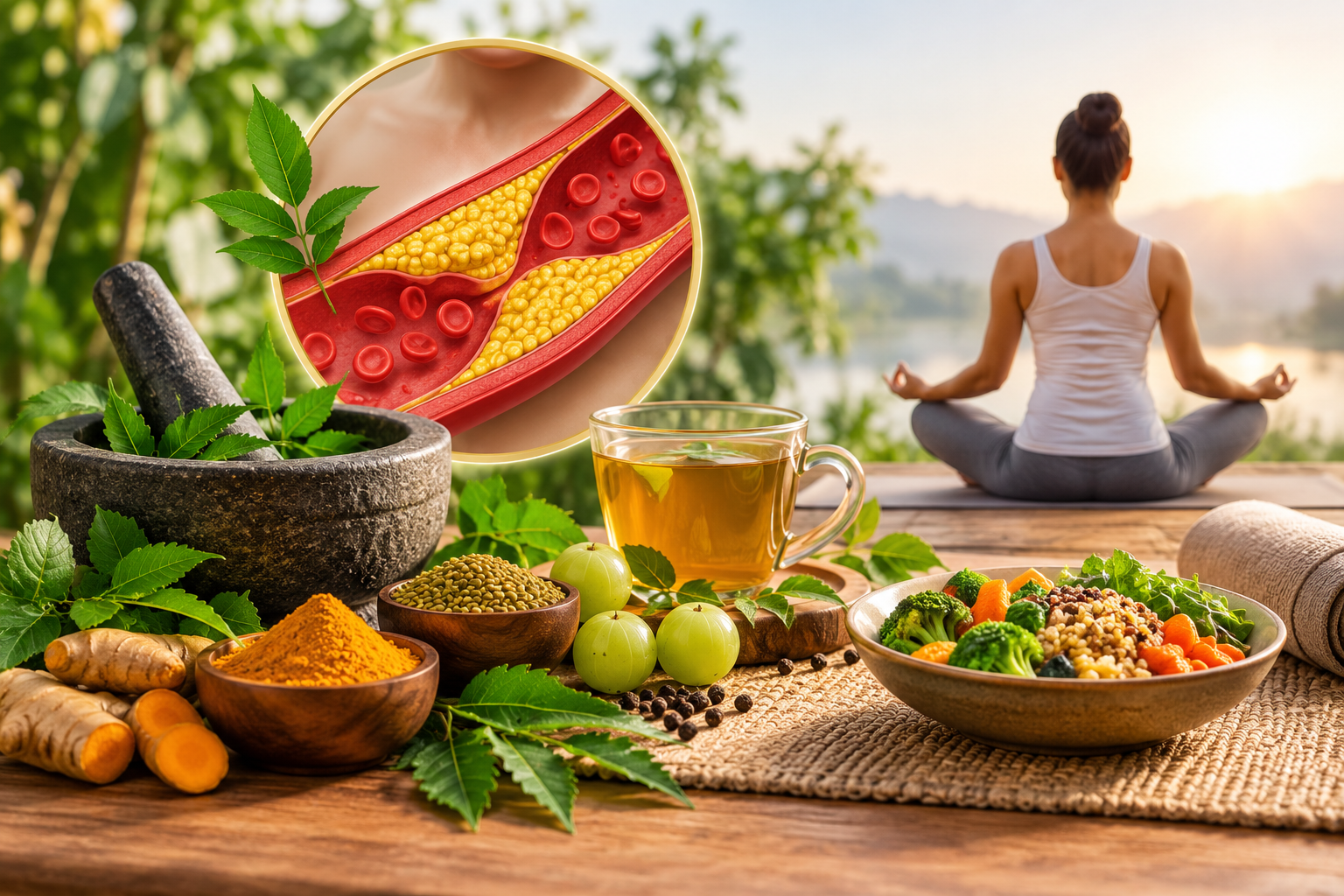
Maintaining healthy cholesterol levels is an important part of overall metabolic wellbeing. Ayurveda offers a holistic approach that focuses on digestion, food habits, daily routine, physical activity, rest, and individual constitution.
If you are searching for the best Ayurvedic treatment for high cholesterol, it is important to understand that Ayurveda does not follow one identical approach for everyone. Traditional Ayurvedic care considers factors such as Prakriti, Agni, Ahara, Vihara, Dinacharya, lifestyle, digestion, and overall wellbeing when developing an individualised wellness routine.
Ayurvedic lifestyle practices focus on suitable food, regular physical activity, adequate rest, mindful eating, stress management, and consistent daily routines.
What Is the Ayurvedic Approach to Healthy Cholesterol?
The Ayurvedic approach focuses on overall metabolic balance rather than relying on a single food, herb, or remedy.
Traditional Ayurveda gives importance to digestion, food habits, physical activity, daily routine, rest, and individual constitution. These principles can be incorporated into everyday life through practical habits such as eating suitable meals, maintaining regular routines, staying active, and avoiding excessive unhealthy foods.
For people concerned about cholesterol, an Ayurvedic wellness routine may focus on:
- Wholesome and suitable food choices
- Appropriate portion sizes
- Regular meal timings
- Mindful eating
- Daily physical activity
- Adequate sleep and rest
- Stress management
- A consistent daily routine
- Personalised Ayurvedic guidance
The objective is to develop sustainable habits rather than depend on a quick fix.
Understanding Metabolic Balance Through Ayurveda
In Ayurveda, Agni is traditionally associated with digestion and transformation. Balanced Agni is considered an important foundation of overall wellbeing.
Ayurveda also recognises that every person has a unique Prakriti, or individual constitution. Therefore, food habits, physical activity, daily routines, and other lifestyle practices may differ from one person to another.
A personalised Ayurvedic lifestyle may consider:
- Individual constitution
- Digestive capacity
- Food habits
- Daily activity
- Sleep patterns
- Stress and emotional wellbeing
- Age and lifestyle
- Seasonal considerations
- Overall wellbeing
These traditional principles encourage greater awareness of everyday habits.
How Can Ahara Support a Healthy Lifestyle?
Ahara, or food, has an important place in Ayurveda. Rather than depending on one particular food, Ayurvedic dietary principles encourage suitable, balanced, and appropriately prepared meals.
A practical approach may include freshly prepared foods, suitable seasonal ingredients, appropriate portions, and mindful eating.
Simple Ayurvedic Food Habits
Consider incorporating these habits into your daily routine:
- Prefer fresh and minimally processed foods
- Include a variety of vegetables and nutritious foods
- Pay attention to portion sizes
- Maintain regular meal timings
- Eat slowly and mindfully
- Avoid unnecessary overeating
- Limit excessive refined and sugary foods
- Reduce frequent consumption of heavily processed foods
- Choose foods according to individual suitability
- Prefer freshly prepared meals when practical
Why Is Agni Important in Ayurveda?
In traditional Ayurveda, Agni represents the principle of digestion and transformation.
Ayurvedic lifestyle practices encourage awareness of appetite, digestion, meal timing, food suitability, and daily routine. Habits such as overeating, irregular meals, prolonged inactivity, and inconsistent routines can make it more difficult to maintain balanced lifestyle habits.
Simple practices can include:
- Eating appropriate portions
- Following regular meal timings
- Eating mindfully
- Staying physically active
- Avoiding unnecessary overeating
- Maintaining adequate rest
These practices are part of the broader Ayurvedic approach to balanced digestion and wellbeing.
How Does Dinacharya Support Metabolic Wellness?
Dinacharya means a structured daily routine and is an important concept in Ayurvedic lifestyle practice.
A consistent routine can make healthy habits easier to maintain. Instead of following a complicated schedule, individuals can establish practical habits that fit their everyday lives.
A simple Dinacharya may include:
- Waking and sleeping at consistent times
- Maintaining regular meal timings
- Including daily movement
- Avoiding prolonged inactivity
- Practising mindful eating
- Creating time for relaxation
- Getting adequate sleep
- Avoiding unnecessary late-night eating
Consistency is often more practical than attempting major lifestyle changes all at once.
Can Exercise Support Healthy Metabolic Wellness?
Regular physical activity is an important part of an active Ayurvedic lifestyle.
From an Ayurvedic perspective, physical activity can be adapted according to an individual's age, capacity, constitution, routine, and preferences.
Suitable activities may include:
- Walking
- Yoga
- Stretching
- Cycling
- Swimming
- Other enjoyable forms of regular movement
People who are not accustomed to exercise can begin gradually according to their ability. The goal is to establish a sustainable routine rather than pursue excessive exercise.
Sleep, Stress Management and Metabolic Wellness
Healthy lifestyle management is not limited to food and exercise.
Adequate sleep, relaxation, and stress management can support a consistent daily routine. Ayurveda traditionally places importance on balanced daily rhythms and appropriate rest.
A practical evening routine may include:
- Maintaining regular sleeping hours
- Reducing unnecessary late-night activity
- Creating a calm bedtime environment
- Practising gentle relaxation
- Using breathing exercises or meditation if suitable
- Allowing sufficient time for rest
These habits can contribute to general wellbeing.
What About Ayurvedic Medicines for High Cholesterol?
People searching for the best Ayurvedic treatment for high cholesterol may encounter many herbal products and traditional formulations. However, there is no single Ayurvedic medicine that is appropriate for every individual.
Traditional Ayurvedic care is personalised. A qualified Ayurvedic practitioner may consider factors such as:
- Prakriti
- Agni
- Dietary habits
- Lifestyle
- Dinacharya
- Age
- Existing health conditions
- Overall wellbeing
Based on an individual assessment, an Ayurvedic practitioner may recommend suitable traditional dietary, lifestyle, or herbal support.
Ayurvedic herbs and formulations should be selected according to individual suitability and professional Ayurvedic guidance.
Ayurvedic Lifestyle vs. Quick-Fix Remedies
A sustainable Ayurvedic lifestyle focuses on:
- Regularity rather than extreme restrictions
- Balanced food habits rather than one “miracle” food
- Appropriate physical activity rather than sudden intense exercise
- Consistent sleep rather than irregular routines
- Personalised guidance rather than copying another person's routine
- Long-term habits rather than short-term solutions
This approach reflects the broader Ayurvedic emphasis on individual suitability and daily routine.
How to Build a Sustainable Ayurvedic Routine
Healthy habits are more useful when they can be maintained over time.
1. Establish Regular Meal and Sleep Times
Create reasonably consistent eating and sleeping patterns.
2. Improve Everyday Food Choices
Prioritise wholesome foods, suitable portions, mindful eating, and freshly prepared meals.
3. Include Regular Movement
Walking, yoga, cycling, swimming, or another suitable activity can become part of your routine.
4. Make Time for Rest
Adequate sleep and relaxation are important parts of a balanced lifestyle.
5. Seek Personalised Guidance
If you are considering Ayurvedic medicines or herbal formulations, consult a qualified Ayurvedic practitioner who can understand your Prakriti, Agni, lifestyle, dietary habits, and individual requirements.
Conclusion
The Ayurvedic approach to metabolic wellness focuses on Ahara, Agni, Vihara, Dinacharya, physical activity, adequate rest, and individualised lifestyle practices.
For people concerned about cholesterol, sustainable habits such as choosing nutritious foods, maintaining appropriate portions, staying physically active, getting adequate sleep, managing stress, and following regular daily routines can form part of a balanced Ayurvedic wellness approach.
Ayurvedic care is traditionally personalised rather than based on a single approach for everyone. At Fair Pharma, Ayurvedic guidance can be tailored to individual needs by considering factors such as Prakriti, Agni, dietary habits, lifestyle and daily routines. If you are considering Ayurvedic medicines or herbal formulations, consult a qualified Ayurvedic practitioner for personalised guidance suited to your individual requirements.
FAQ
What is the best Ayurvedic treatment for high cholesterol?
There is no single Ayurvedic approach suitable for everyone. Traditional Ayurvedic guidance is individualized and may consider factors such as Prakriti, Agni, Ahara, lifestyle, age and overall wellbeing when developing suitable wellness recommendations.
Can Ayurveda help maintain healthy cholesterol levels?
Ayurvedic lifestyle principles encourage balanced food choices, regular physical activity, appropriate meal timings, adequate sleep, stress management, and consistent daily routines as part of holistic metabolic wellness.
Which Ayurvedic foods are good for cholesterol?
Rather than relying on one specific food, Ayurveda encourages a balanced eating pattern with suitable whole foods, vegetables, appropriate portions, and mindful eating. Individual dietary requirements may vary.
Is Agni related to cholesterol?
Agni is a traditional Ayurvedic concept associated with digestion and transformation. It is understood within Ayurveda's broader framework of digestion, metabolism, and wellbeing.
Can Ayurvedic herbs be used for high cholesterol?
Ayurvedic herbs and traditional formulations should be selected according to individual suitability. A qualified Ayurvedic practitioner can assess Prakriti, Agni, dietary habits, lifestyle, and other individual factors before recommending appropriate herbal support.
Can everyone follow the same Ayurvedic diet?
No. Ayurveda emphasises individual suitability. Food choices and routines may vary according to constitution, digestive capacity, lifestyle, age, season, preferences, and individual needs.
Disclaimer: This article provides general information based on traditional Ayurvedic principles and is intended for educational and wellness purposes. Ayurvedic dietary practices, lifestyle recommendations and traditional formulations may vary according to Prakriti, digestive capacity, lifestyle, health circumstances and individual needs. For personalized Ayurvedic guidance, consult a qualified Ayurvedic practitioner before beginning any new Ayurvedic medicine, formulation or wellness practice.