
Fatty Liver Grade 1 Symptoms, Grade 2 Treatment & Grade 3 Liver Wellness Support Ayurveda Explained
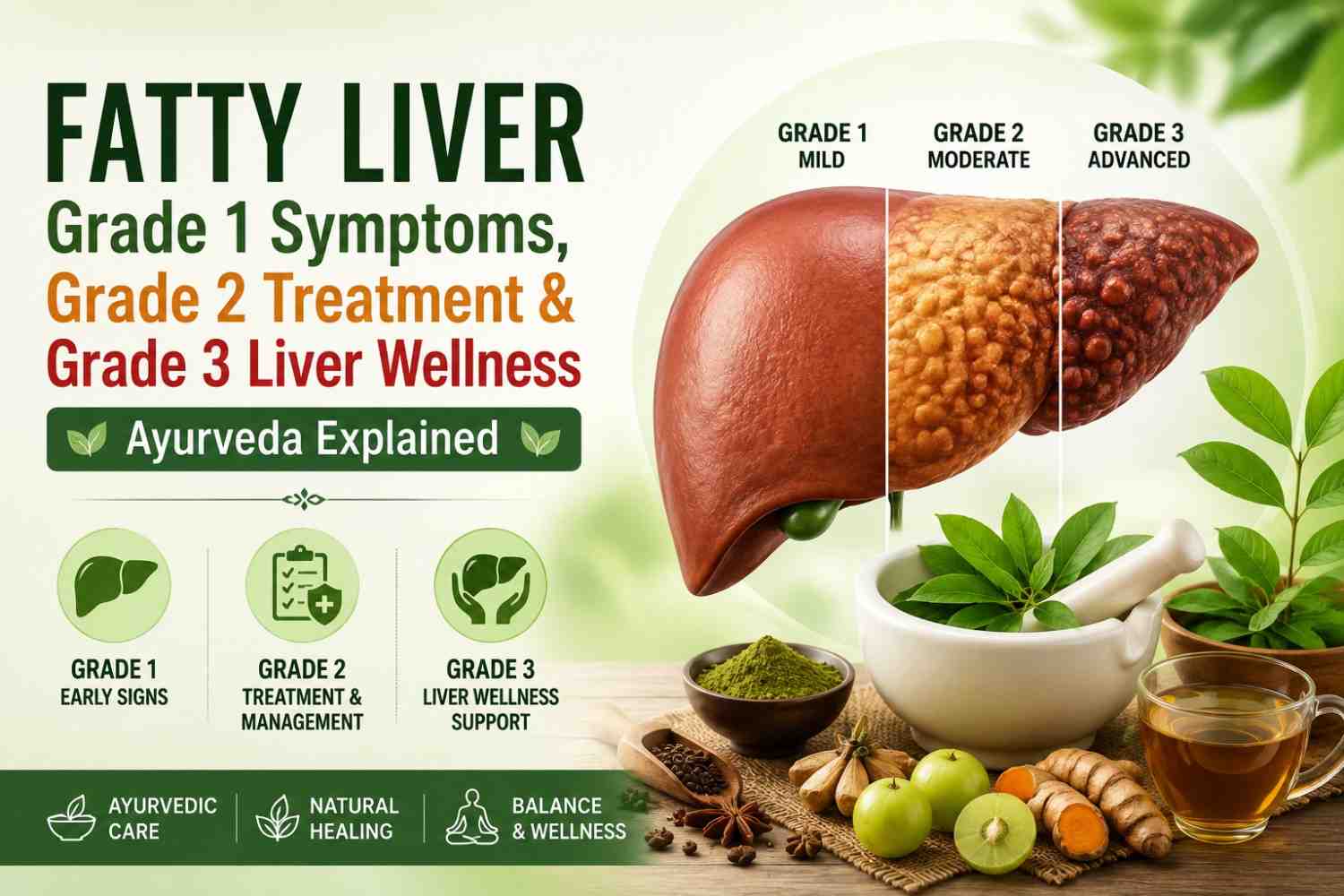
Fatty liver is becoming increasingly common due to modern lifestyle habits, irregular eating patterns, stress, and reduced physical activity. Many people discover they have fatty liver only after a routine health checkup because the condition often develops silently.
Understanding fatty liver grade 1 symptoms, fatty liver grade 2 treatment approaches, and concerns related to fatty liver grade 3 liver damage can help individuals make informed lifestyle choices early. Ayurveda emphasizes a holistic approach focused on diet, daily routine, digestion, and long-term wellness support.
What Are Fatty Liver Grades and Why Do They Matter?
Fatty liver refers to excess fat accumulation in the liver. Fatty liver is commonly understood in different grades based on the level of fat accumulation in the liver.
Grade 1 is generally considered the earliest stage.
Grade 2 indicates moderate fat accumulation.
Grade 3 represents advanced fatty liver changes requiring close medical attention and lifestyle management.
Based on health and wellness observations, early identification and lifestyle improvements can play an important role in supporting liver wellness.
What Are Fatty Liver Grade 1, Grade 2 and Grade 3?
Fatty liver grades describe the amount of fat accumulated in the liver. Fatty liver grade 1 symptoms may be mild or absent, while fatty liver grade 2 treatment often focuses on lifestyle and dietary improvements. Fatty liver grade 3 liver damage concerns require professional evaluation and comprehensive wellness management to support liver health.
Fatty Liver Grade 1 Symptoms, Grade 2 Treatment, and Grade 3 Liver Damage
• Fatty liver develops gradually and may not show early symptoms.
• Diet and lifestyle choices significantly influence liver wellness.
• Fatty liver grade 1 symptoms are often subtle.
• Ayurvedic wellness practices focus on digestion, balance, and healthy routines.
• Early action supports long-term liver health.
What Are Common Fatty Liver Symptoms?
Many people experience few or no symptoms during the early stages.
Common fatty liver symptoms may include:
• Persistent tiredness
• Digestive discomfort
• Feeling heavy after meals
• Reduced energy levels
• Mild abdominal discomfort
• Difficulty maintaining healthy metabolism
What Causes Fatty Liver?
Several lifestyle factors may contribute to fat accumulation in the liver.
Common factors include:
• High intake of processed foods
• Excess sugar consumption
• Sedentary lifestyle
• Irregular eating habits
• Weight management challenges
• Metabolic imbalances
Experts recommend addressing these factors through sustainable lifestyle modifications rather than short-term dietary restrictions.
What Causes Fatty Liver According to Ayurveda?
According to Ayurveda, liver wellness is closely associated with the healthy functioning of Yakrit (liver), balanced Pitta Dosha, proper Agni (digestive fire), efficient Rasa Dhatu and Rakta Dhatu nourishment, and the absence of Ama (metabolic toxins formed due to impaired digestion). When these factors become imbalanced, normal metabolic processes may be affected, gradually contributing to fatty liver changes and reduced digestive efficiency.
Rather than viewing every individual in the same way, Ayurveda emphasizes an individualized assessment before recommending care. During consultation, an Ayurvedic physician evaluates the person's:
Prakriti (body constitution)
Vikriti (current Dosha imbalance)
Agni (digestive strength)
Ama accumulation
Diet and lifestyle habits
Metabolic health
Overall wellbeing
Common Ayurvedic Factors That May Contribute to Fatty Liver
Pitta Imbalance
Excess Pitta may affect liver function, digestion, metabolism, and internal heat, potentially contributing to liver-related discomfort.
Ama Accumulation
According to Ayurveda, weak digestion may result in the formation of Ama, which can interfere with normal metabolic processes and overall liver wellness.
Weak Agni (Digestive Fire)
Healthy digestion is considered essential for proper tissue nourishment. When Agni becomes weak, digestion and metabolism may become less efficient, affecting overall health.
Kapha Aggravation
Excess Kapha, often associated with sedentary lifestyle habits, heavy foods, and overeating, may contribute to sluggish metabolism and fat accumulation.
Lifestyle Factors
Irregular eating habits, highly processed foods, excessive sugar intake, lack of exercise, poor sleep, chronic stress, and excessive alcohol consumption may gradually disturb Dosha balance and influence liver health.
What Are Fatty Liver Grade 1 Symptoms?
Fatty liver grade 1 symptoms are often difficult to identify because many individuals feel completely healthy.
Possible signs may include:
• Occasional fatigue
• Mild digestive discomfort
• Reduced appetite
• Feeling sluggish after meals
This stage provides an important opportunity to focus on healthy dietary practices and daily wellness habits.
For more guidance, explore our Ayurvedic Liver Wellness page and Personalized Consultation Services.
How Is Fatty Liver Grade 2 Treatment Approached?
When discussing fatty liver grade 2 treatment, Ayurveda emphasizes a comprehensive wellness strategy rather than a single solution.
Traditional Ayurvedic approaches may focus on:
• Supporting digestive balance
• Encouraging healthy metabolism
• Following a structured daily routine
• Improving dietary discipline
• Maintaining healthy physical activity
Based on Ayurvedic principles, improving digestion and supporting metabolic balance are considered important aspects of liver wellness.
Many individuals also explore Ayurvedic wellness support options such as Fair Pharma's Liv-QR Tablets as part of their broader liver wellness journey under professional guidance.
What Should You Know About Fatty Liver Grade 3 Liver Damage?
Fatty liver grade 3 liver damage concerns indicate advanced fatty liver changes that require careful evaluation and ongoing guided care.
At this stage, individuals are often encouraged to:
• Follow qualified professional guidance
• Maintain consistent dietary discipline
• Prioritize healthy lifestyle habits
• Monitor overall wellness regularly
• Avoid self-medication
According to industry standards, early intervention and long-term lifestyle management are important for supporting liver health.
What Is the Best Fatty Liver Diet Chart?
A balanced fatty liver diet chart focuses on nutrient-rich foods that support overall wellness.
Morning
• Warm water
• Fresh fruits
• Light breakfast
Lunch
• Whole grains
• Cooked vegetables
• Balanced protein sources
Evening
• Herbal beverages
• Fresh fruits
Dinner
• Light meals
• Easily digestible foods
• Early dinner timing
Consistency often matters more than extreme dietary restrictions.
Which Foods for Fatty Liver Are Commonly Recommended?
Foods for fatty liver wellness generally include:
• Fresh vegetables
• Seasonal fruits
• Whole grains
• Fiber-rich foods
• Healthy hydration
• Traditional Ayurvedic dietary preparations
These choices support healthy digestion and overall metabolic balance.
What Foods Should Be Limited?
Individuals focusing on liver wellness often reduce:
• Deep-fried foods
• Sugary beverages
• Excess refined carbohydrates
• Highly processed foods
• Late-night heavy meals
A balanced approach is usually more sustainable than strict elimination diets.
How Does Ayurveda Support Liver Wellness?
Ayurveda views liver health through the lens of digestion, metabolism, and overall lifestyle balance.
Traditional Ayurvedic wellness practices may include:
• Dinacharya (daily routine)
• Mindful eating habits
• Seasonal wellness practices
• Digestive support strategies
• Lifestyle adjustments
Many people combine these practices with Ayurvedic approach formulations such as Liv-QR Tablets as part of a broader wellness plan.
You may also find our guides on Early Signs of Fatty Liver, Foods for Liver Wellness, and Ayurvedic Care Support helpful.
Which Ayurvedic Herbs Are Traditionally Used to Support Liver Wellness?
Ayurveda includes several herbs that have traditionally been used to support healthy liver function, digestion, metabolism, and overall wellbeing. The selection of herbs depends on the individual's Prakriti, Dosha imbalance, digestive strength, symptoms, and overall health.
Depending on professional assessment, an Ayurvedic physician may recommend herbs such as:
- Bhumyamalaki (Phyllanthus niruri)
- Kalmegha (Andrographis paniculata)
- Guduchi (Tinospora cordifolia)
- Bhringaraj (Eclipta alba)
- Katuki (Picrorhiza kurroa)
- Punarnava (Boerhavia diffusa)
- Triphala
- Haridra (Turmeric)
Herbal medicines should always be selected and used under the guidance of a qualified Ayurvedic physician. Self-medication is not recommended.
When Should You Seek Professional Guidance?
Consider seeking professional guidance if you experience:
• Persistent fatigue
• Digestive concerns
• Ongoing wellness challenges
• Questions regarding fatty liver management
Early consultation helps individuals make informed decisions and adopt suitable wellness strategies.
How Do Ayurvedic Medicines in Kerala Fit Into Fatty Liver Care?
Ayurvedic medicines in Kerala are selected after a detailed assessment of an individual's symptoms, body constitution, digestive health, lifestyle, and overall medical history. Rather than following a one-size-fits-all approach, qualified Ayurvedic physicians recommend personalized formulations that complement dietary guidance, lifestyle modifications, and long-term wellness strategies.
There is no single Ayurvedic medicine suitable for everyone with fatty liver. Depending on the individual's condition and Ayurvedic evaluation, a qualified physician may recommend personalized herbal support, including Liv-QR Tablets when considered appropriate, as part of a comprehensive Ayurvedic wellness plan.
Professional consultation helps ensure that herbal formulations are appropriate for each individual's health condition, existing medical history, and overall wellness goals.
Why Choose Ayurvedic Treatments in Kerala?
Kerala is widely recognized for its rich Ayurvedic heritage, experienced physicians, and emphasis on personalized, holistic healthcare. Many individuals choose Ayurvedic treatments in Kerala because they focus on understanding each person's unique body constitution (Prakriti), Dosha balance, digestion, lifestyle, and overall health before recommending individualized care.
Depending on the individual's assessment, Ayurvedic care may include:
- Personalized Ayurvedic consultations
- Individualized herbal medicine recommendations
- Dietary guidance based on Ayurvedic principles
- Lifestyle modifications (Dinacharya)
- Digestive and metabolic wellness support
- Preventive health and long-term wellness strategies
- Regular follow-up and personalized care
The goal is to support healthy liver function, improve digestion and metabolism, and promote long-term wellbeing through individualized Ayurvedic guidance.
Conclusion
Understanding fatty liver grade 1 symptoms, fatty liver grade 2 treatment approaches, and concerns surrounding fatty liver grade 3 liver damage can help individuals make proactive wellness decisions. A balanced fatty liver diet chart, appropriate foods for fatty liver, healthy daily habits, and Ayurvedic wellness support can contribute to long-term liver health.
If you are looking for personalized Ayurvedic wellness guidance, Book an appointment with Fair Pharma today and explore holistic liver wellness support tailored to your needs.
FAQs
Can fatty liver improve with lifestyle changes?
Healthy dietary habits and consistent lifestyle improvements may support overall liver wellness over time.
What are the common fatty liver grade 1 symptoms?
Fatty liver grade 1 often develops without noticeable symptoms. Some individuals may experience mild fatigue, digestive discomfort, reduced appetite, or a feeling of heaviness after meals.
Is a fatty liver diet chart important?
A structured diet plan helps support healthy eating habits and long-term wellness goals.
What foods for fatty liver are generally preferred?
Fresh vegetables, fruits, whole grains, and fiber-rich foods are commonly recommended.
Can Ayurvedic medicine for fatty liver support wellness?
Ayurvedic wellness formulations are traditionally used alongside dietary and lifestyle practices under professional guidance.
Medical Disclaimer: This article is intended for educational purposes only. Ayurvedic care is individualized, and any treatment or herbal formulation should be undertaken under the guidance of a qualified Ayurvedic physician or appropriate healthcare professional.