
Fatty Liver Treatment in Ayurveda: Symptoms, Causes, Diet & Liver Health Support
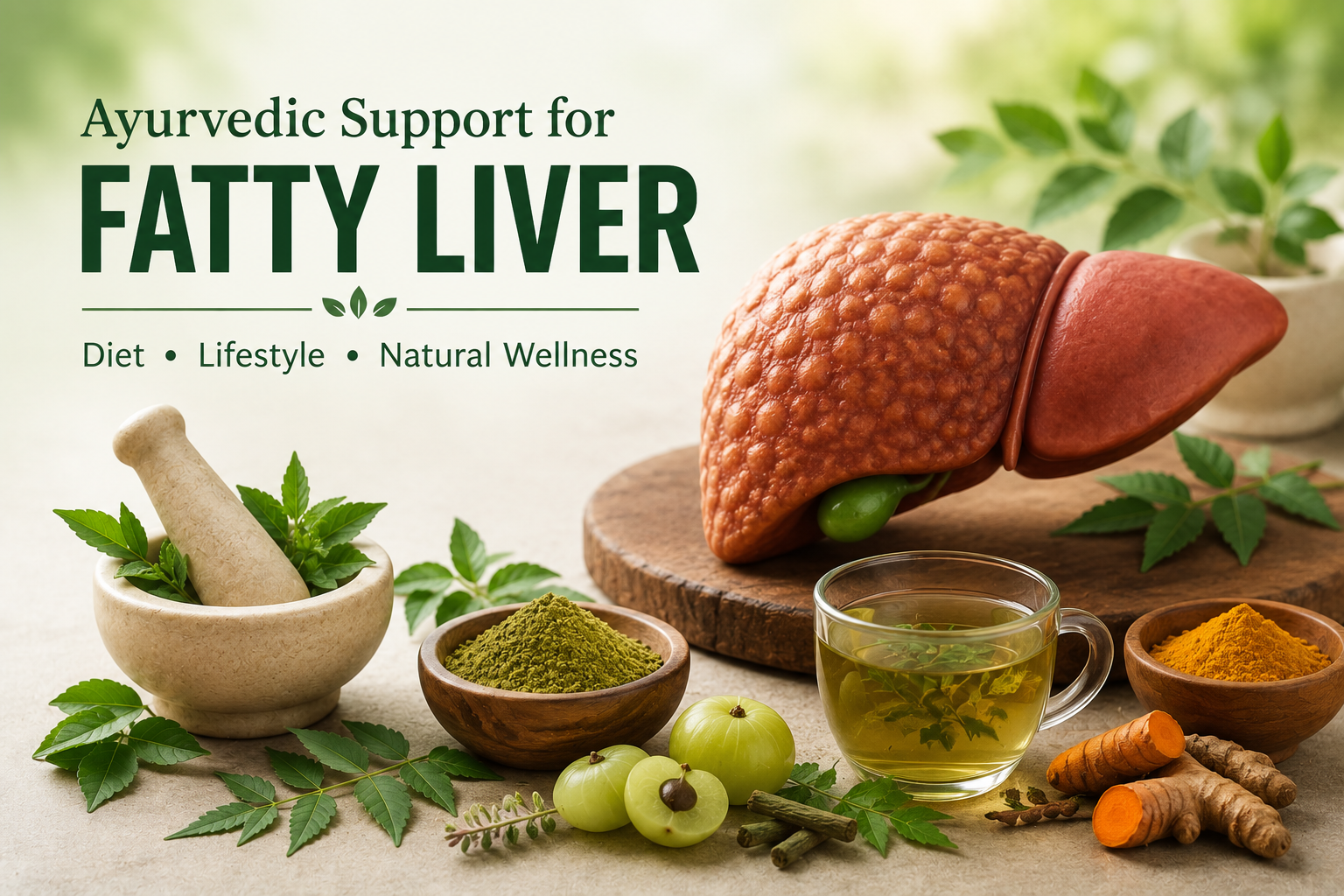
Fatty liver disease, clinically known as Non-Alcoholic Fatty Liver Disease (NAFLD), is a growing metabolic health concern linked to modern lifestyle patterns. It occurs when excess fat accumulates in liver cells and is commonly associated with obesity, insulin resistance, diabetes, and poor dietary habits.
In some individuals, fatty liver is also associated with metabolic syndrome, which includes high blood sugar, high cholesterol, and abdominal obesity. If not managed, it may progress to inflammation and liver function impairment.
From an Ayurvedic perspective, liver health is influenced by:
- Pitta dosha balance
- Agni (digestive fire)
- Rakta dhatu (blood metabolism)
Ayurvedic approaches for fatty liver management support focus on improving digestion, metabolic balance, and lifestyle habits through traditional yet supervised wellness practices.
What is fatty liver in Ayurveda?
Fatty liver is a metabolic condition where excess fat accumulates in liver cells, commonly associated with Non-Alcoholic Fatty Liver Disease (NAFLD). In Ayurveda, it is linked to Pitta dosha imbalance, weak digestion (Agni), and Ama accumulation, which may affect liver metabolism. Supportive care includes diet regulation, lifestyle correction, and supervised wellness practices.
Understanding Fatty Liver (Modern + Ayurvedic Perspective)
Modern Medical Perspective
Fatty liver is a metabolic condition in which excess fat accumulates in the liver cells. It is commonly associated with:
- Obesity
- Diabetes mellitus
- High triglyceride levels
- Sedentary lifestyle
- Unhealthy dietary habits
- Metabolic syndrome
In some individuals, liver enzyme levels such as ALT and AST may become elevated, reflecting stress on normal liver function.
Ayurvedic Perspective
In Ayurveda, fatty liver is traditionally associated with imbalances in Pitta and Kapha doshas, weakened digestive fire (Agni), and the accumulation of Ama (metabolic toxins). Improper digestion and unhealthy lifestyle habits are believed to gradually disturb metabolic balance and liver wellness.
Traditional Ayurvedic indications may include:
- Heaviness in the body
- Sluggish digestion
- Reduced appetite
- Tiredness or low energy
- Sense of metabolic imbalance
Ayurveda focuses on supporting digestion, metabolic harmony, and overall liver wellness through dietary discipline, lifestyle regulation, and individualized wellness practices.
Causes & Risk Factors
Medical Factors
- Obesity
- Diabetes
- High cholesterol
- Poor diet
- Lack of exercise
Lifestyle Factors
- Irregular meals
- Chronic stress
- Poor sleep
- Sedentary habits
Ayurvedic Factors
- Agni imbalance
- Pitta aggravation
- Ama accumulation
- Heavy oily foods
Common Symptoms
- Fatigue or low energy
- Mild abdominal discomfort
- Heaviness in upper abdomen
- Loss of appetite
- Digestive issues
- Often asymptomatic in early stages
Diagnosis requires ultrasound and liver function tests.
Ayurvedic approches for Fatty liver management support
Core Principle
Ayurveda focuses on restoring metabolic balance through digestion support, dietary regulation, and lifestyle correction rather than targeting disease directly.
Dietary support (AHARA)
- Light, freshly prepared meals
- High-fiber vegetables
- Whole grains in moderation
- Warm water intake
- Reduced sugar & processed foods
- Minimal fried/oily foods
Supports Agni and reduces Ama accumulation.
Lifestyle support (VIHARA)
Daily Routine
- Fixed meal timings
- Early dinner
- Regular sleep cycle
Physical Activity
- Walking
- Yoga
- Avoid sedentary habits
Stress Control
- Meditation
- Pranayama
- Relaxation practices
Ayurvedic Herbal Practices (Kerala Tradition)
Traditionally referenced herbs:
- Bhumyamalaki
- Kutki
- Guduchi
- Triphala
Must be used only under qualified supervision.
Traditional Ayurvedic Wellness Support
Ayurvedic wellness practices may include individualized dietary guidance, lifestyle regulation, digestive wellness support, and traditional routines aimed at supporting overall metabolic balance and liver wellness under qualified supervision.
Role of Medical Care
Modern management includes:
- Liver function monitoring (ALT/AST)
- Diabetes & cholesterol control
- Weight management
- Lifestyle correction
When to consult a Doctor
Seek medical attention if:
- Persistent fatigue continues
- Abnormal liver reports
- Abdominal discomfort increases
- Diabetes or obesity is present
- Symptoms persist long-term
Key Takeaways on Ayurvedic Support for Fatty Liver Management
- Fatty liver is a metabolic condition (NAFLD)
- Ayurveda supports digestion and metabolic balance
- Lifestyle plays a major role in management
- Medical supervision is essential
Conclusion
Fatty liver is a lifestyle-related metabolic condition that requires consistent attention to diet, physical activity, and medical supervision. Ayurveda provides a supportive framework focused on digestion, metabolism, and holistic balance, which may complement modern healthcare when used responsibly. A combined approach ensures safer and more effective long-term liver wellness outcomes.
Healthcare awareness initiatives from responsible organizations, including Fair Pharma, support informed and responsible health decision-making.
FAQ
Can Ayurveda support fatty liver management naturally?
Ayurveda supports liver wellness by improving digestion (Agni), balancing Pitta dosha, and reducing Ama (metabolic toxins) through diet, lifestyle, and traditional practices.
What is fatty liver in Ayurveda?
It is linked with Pitta imbalance, weak digestion, and Ama accumulation affecting metabolism.
What diet is recommended for fatty liver?
Light, fresh, low-oil, high-fiber foods are commonly suggested.
Are Ayurvedic herbs safe?
They should only be used under qualified supervision.
What is the best way to manage fatty liver?
A combination of medical care, lifestyle changes, and supervised supportive practices is recommended.