Meda Dhatu in Ayurveda: Understanding Its Role in Cholesterol Balance
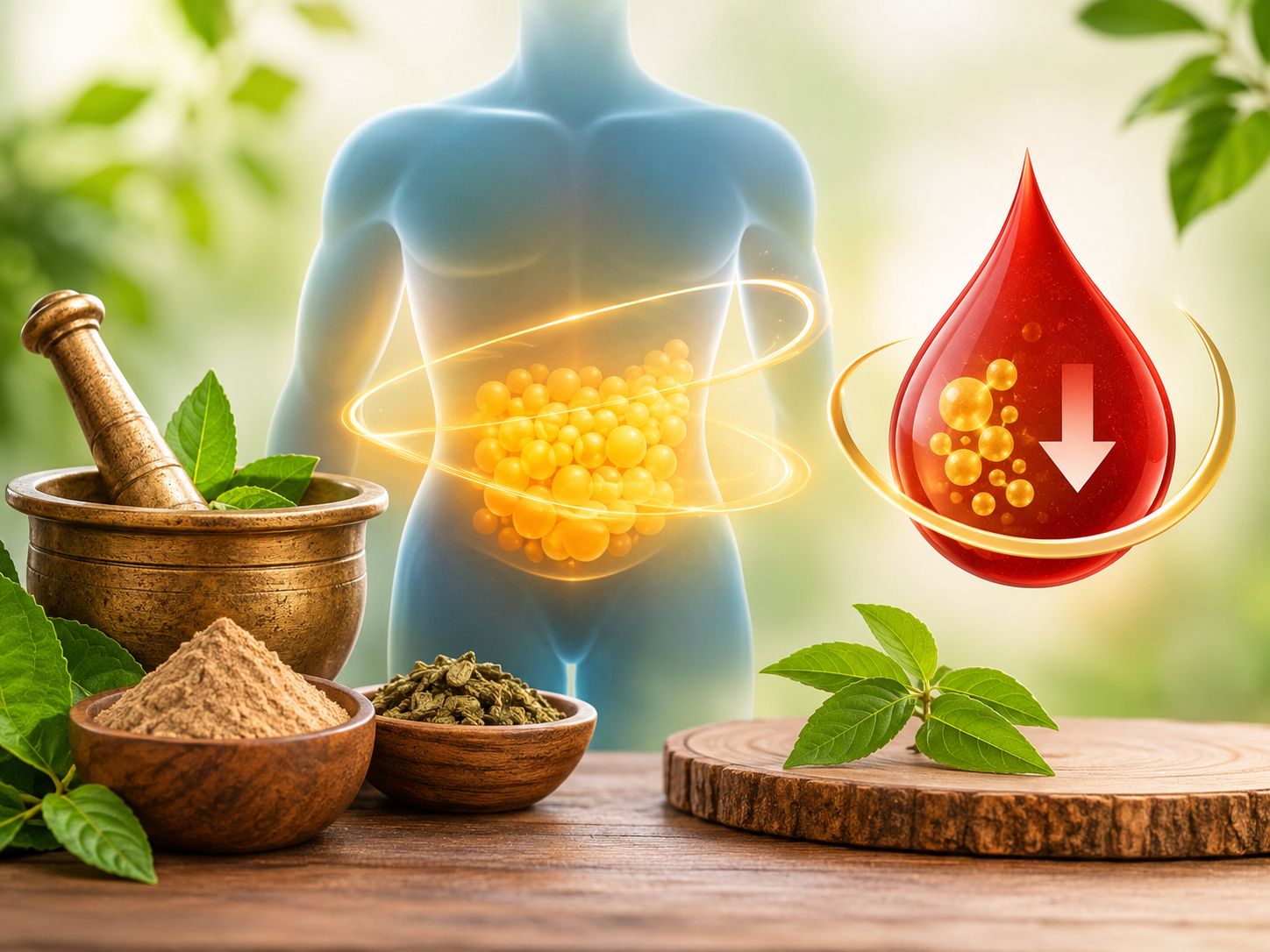
Ayurveda explains the body's nourishment and functioning through the principles of Dosha, Dhatu and Mala. Among the seven Dhatus, Meda Dhatu holds an important place in maintaining the body's natural lubrication, stability and nourishment.
The Ayurvedic understanding of Meda Dhatu also provides a traditional perspective on Medoroga and conditions associated with its disturbance. Concepts such as Kapha Dosha, Agni and Medovaha Srotas help explain how Ayurveda considers the formation, nourishment and accumulation of Meda Dhatu.
Understanding these principles offers insight into the Ayurvedic approach to maintaining the natural balance of the body's Dhatus.
What Is Meda Dhatu in Ayurveda?
Meda Dhatu is the fourth among the seven fundamental Dhatus described in Ayurveda. The seven Dhatus are Rasa, Rakta, Mamsa, Meda, Asthi, Majja and Shukra.
Each Dhatu has a specific role in supporting the body's structure and nourishment. Meda Dhatu is traditionally associated with Sneha, meaning lubrication or unctuousness. It contributes to the body's natural softness, stability and nourishment.
Ayurveda considers Meda Dhatu an essential component of the body's overall balance. Its proper formation and nourishment are understood in relation to the preceding Dhatus and the functioning of the respective Dhatvagni.
Understanding Meda Dhatu and Medoroga
Medoroga refers to conditions discussed in Ayurveda in connection with the disturbance or abnormal accumulation of Meda Dhatu.
The term Meda Dhatu Dushti describes an alteration in the normal state of Meda Dhatu. Classical Ayurvedic discussions associate such disturbances with factors including unsuitable food habits, excessive nourishment and irregular daily routines.
Sthaulya is another important Ayurvedic concept discussed in relation to excessive accumulation of Meda Dhatu. These concepts highlight the importance Ayurveda gives to maintaining appropriate nourishment and balance in Dhatu formation.
Role of Agni in Meda Dhatu Formation
Agni represents the principle of digestion and transformation in Ayurveda. It plays an important role in the processing of Ahara and the nourishment of the body's Dhatus.
Medodhatvagni is the specific transformative principle associated with the formation and nourishment of Meda Dhatu.
Ayurvedic understanding considers the following principles when discussing Agni:
● Jatharagni : The primary digestive fire responsible for the digestion of food.
● Dhatvagni : The transformative principle associated with the nourishment and formation of individual Dhatus.
● Ahara : The quality, quantity and suitability of food.
● Ama : A concept associated with improperly processed or digested material in Ayurveda
Kapha Dosha and Meda Dhatu: Understanding Their Connection
Kapha Dosha and Meda Dhatu share certain qualities in Ayurvedic understanding, particularly Guru (heaviness) and Snigdha (unctuousness).
Kapha Dosha is traditionally associated with stability, structure and nourishment, while Meda Dhatu contributes to lubrication and bodily support.
When considering Meda Dhatu-related disturbances, Ayurveda also examines Kapha Dosha, Agni and the individual's Prakriti.
However, Meda Dhatu and Kapha Dosha are distinct Ayurvedic principles. Their relationship is understood through their respective qualities and functions rather than treating them as interchangeable concepts.
Medovaha Srotas: The Channels Associated with Meda Dhatu
Srotas are the channels described in Ayurveda through which various bodily substances and nourishing elements are understood to move.
Medovaha Srotas refers to the channels associated with Meda Dhatu. Classical Ayurvedic descriptions discuss their importance in relation to the formation, nourishment and movement of Meda.
Their proper functioning is an important consideration when understanding Meda Dhatu and Medoroga.
Ayurveda therefore considers not only the condition of individual Dhatus but also the associated Srotas and their functions.
Ahara and Vihara: Ayurvedic Principles for Meda Dhatu Balance
Ahara (food) and Vihara (lifestyle and daily activities) are important aspects of Ayurvedic living. Their suitability is considered according to an individual's Prakriti, Agni and overall condition.
Traditional Ayurvedic considerations include:
Suitable food habits : Choosing food according to individual digestive capacity and maintaining appropriate food quantities.
Regular meal timings : Following consistent eating habits rather than irregular food routines.
Balanced daily activities : Avoiding excessive inactivity and maintaining suitable physical activities.
Following Dinacharya : Establishing regular sleeping, waking and daily routines.
Seasonal adjustments : Considering Ritu and adapting food and lifestyle habits according to seasonal influences.
Ayurveda does not recommend one universal diet or lifestyle routine for everyone. Individual constitution and requirements guide these choices.
Why Personalised Ayurvedic Guidance Matters
Every individual has a different Prakriti and distinct requirements. Therefore, Ayurveda considers the individual's Dosha, Dhatu, Agni and overall condition before suggesting suitable Ahara, Vihara or traditional Ayurvedic preparations.
An Ayurvedic consultation may consider:
● Prakriti and Vikriti.
● Agni and digestive capacity.
● Meda Dhatu and Kapha Dosha.
● Ahara and Vihara.
● Individual food habits and daily routines.
● Seasonal influences and overall constitution
At Fair Pharma in Kochi, individuals can enquire about personalised Ayurvedic consultation options and traditional guidance related to Meda Dhatu and Medoroga.
Conclusion
Meda Dhatu is an important component of the seven Dhatus described in Ayurveda. Its formation, nourishment and natural functions are understood through the principles of Agni, Dosha, Srotas and Dhatu Poshana.
The Ayurvedic concepts of Meda Dhatu, Medoroga and Kapha Dosha highlight the importance of suitable food habits, balanced daily routines and individualised guidance.
To learn more about traditional Ayurvedic approaches related to cholesterol concerns, contact Fair Pharma in Kochi to enquire about personalised consultation options.
Frequently Asked Questions
What is Meda Dhatu in Ayurveda?
Meda Dhatu is the fourth of the seven Dhatus in Ayurveda. It is traditionally associated with lubrication, unctuousness, stability and nourishment.
What is the role of Medodhatvagni?
Medodhatvagni is the transformative principle associated with the formation and nourishment of Meda Dhatu.
How do Ahara and Vihara influence Meda Dhatu?
Ayurveda considers suitable food habits, daily routines and lifestyle practices important for maintaining the natural balance of Dhatus.