
Peenasa in Ayurveda: Understanding the Traditional Ayurvedic Perspective
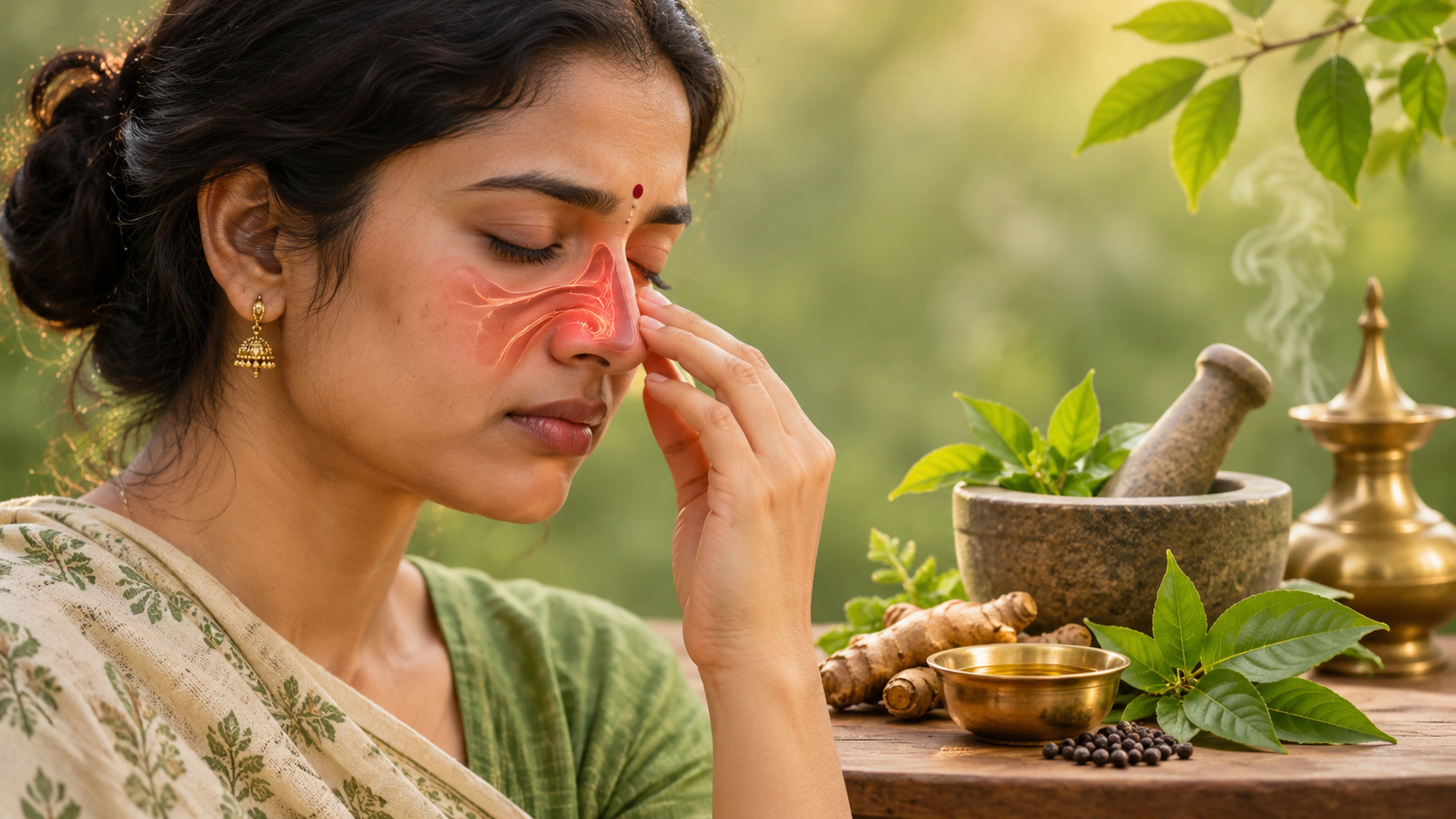
Nasal discomfort, recurring sneezing, nasal discharge and a feeling of heaviness around the head are concerns discussed in traditional Ayurvedic knowledge. Ayurveda explains different conditions affecting the nasal passages through concepts such as Peenasa and Pratiśyāya.
Peenasa in Ayurveda is understood through the principles of Dosha, particularly Vata, Pitta and Kapha. Its traditional understanding also considers an individual's Prakriti, Agni, Ahara and Vihara.
This article explores the Ayurvedic perspective on Peenasa, its relationship with Pratiśyāya and the importance of individualised dietary and lifestyle practices.
What Is Peenasa in Ayurveda?
Peenasa, also written as Pīnasa, is a traditional Ayurvedic term associated with conditions affecting the nasal passages. Classical Ayurvedic descriptions discuss different manifestations of Peenasa in relation to Dosha involvement and individual bodily conditions.
The understanding of Peenasa is not limited to one manifestation. Traditional explanations consider the nature of nasal discharge, obstruction and other associated features alongside the person's overall condition.
Ayurveda approaches such conditions through its broader principles of Dosha, Agni, Dhatu and Prakriti.
Role of Doshas in the Ayurvedic Understanding of Peenasa
Ayurveda recognises three fundamental Doshas: Vata, Pitta and Kapha. These principles are considered important in understanding individual constitution and changes in bodily balance.
Different Dosha conditions may be associated with different manifestations in traditional descriptions of nasal disorders.
Vata Dosha
Vata is traditionally associated with movement, dryness and lightness. In Ayurvedic descriptions of Vata-related nasal conditions, dryness, frequent sneezing and variations in nasal discharge may be considered.
The condition of Vata is understood alongside the individual's Prakriti and other associated Lakshana.
Kapha Dosha
Kapha is associated with qualities such as heaviness, coolness and stability. Traditional descriptions of Kapha-related nasal conditions may include heaviness around the head, thicker discharge and a feeling of obstruction.
Vata-Kapha involvement is also considered in the classical understanding of certain nasal conditions.
Pitta Dosha
Pitta is traditionally associated with heat and transformation. Certain Pitta-related descriptions may include warmth, burning sensations and changes in the nature of nasal discharge.
The involvement of Vata, Pitta and Kapha varies according to the individual condition. Therefore, Ayurvedic understanding considers the complete pattern rather than focusing on one feature alone.
Agni and Its Importance in Ayurveda
Agni represents the principle of digestion and transformation in Ayurveda. It plays an important role in the traditional understanding of food processing and nourishment of the Dhatus.
Ayurveda gives importance to maintaining appropriate Agni as part of overall bodily balance.
When considering an individual's condition, traditional Ayurvedic assessment may include:
Digestive capacity and appetite.
Regularity of food habits.
Suitability of daily meals.
Individual Prakriti and Dosha condition.
General dietary and lifestyle practices.
These considerations form part of the broader Ayurvedic understanding of individual wellbeing.
Ahara: Ayurvedic Dietary Considerations
Ahara, meaning food, is one of the important pillars of Ayurvedic living. Ayurveda considers the quality, quantity, preparation and suitability of food according to individual Prakriti and Agni.
Traditional dietary considerations may include:
Choosing freshly prepared and suitable meals.
Maintaining regular meal timings.
Considering food that is appropriate for individual digestive capacity.
Giving importance to seasonal food habits.
Avoiding irregular eating practices.
Following suitable food combinations according to Ayurvedic principles.
For individuals in Kerala, familiar seasonal and locally available foods may be considered when developing an appropriate dietary routine.
Ayurveda does not prescribe one universal food list for everyone. Dietary choices should be considered according to individual constitution, digestive capacity and other requirements.
Vihara and Dinacharya: Ayurvedic Lifestyle Principles
Vihara refers to lifestyle practices, while Dinacharya describes the traditional Ayurvedic principle of maintaining a suitable daily routine.
Ayurveda considers daily habits and seasonal influences important aspects of individual wellbeing.
Some traditional lifestyle considerations include:
Maintaining regular routines: Consistent sleeping, waking and meal timings can help establish a structured daily routine.
Following seasonal practices: Ritu, meaning season, is an important consideration in Ayurveda. Daily habits may be adapted according to seasonal changes.
Maintaining personal cleanliness: Personal hygiene forms an important part of everyday Ayurvedic living.
Being mindful of environmental surroundings: Dust and smoke may be considered when understanding recurring nasal discomfort.
Giving importance to adequate rest: Proper rest and balanced daily activities are important aspects of Vihara.
Traditional nasal practices should be selected according to individual suitability and appropriate Ayurvedic guidance rather than followed independently.
Ayurvedic Herbs and Traditional Formulations
Classical Ayurvedic knowledge describes different herbs and formulations in connection with various conditions and Dosha considerations.
Their selection depends on the traditional understanding of the individual's Prakriti, Dosha involvement, Agni and overall requirements.
Not every Ayurvedic preparation is suitable for every individual. The ingredients, preparation, quantity and duration should be considered under the guidance of a qualified Ayurvedic practitioner.
Individuals should also share relevant details about their health background, ongoing preparations and previous sensitivities during consultation.
Why Individualised Ayurvedic Guidance Matters
Ayurveda recognises that every individual has a unique Prakriti and different health requirements. Therefore, traditional guidance should consider the person as a whole rather than focus on one Lakshana.
An Ayurvedic consultation may consider:
Prakriti (individual constitution).
Vikriti (present Dosha condition).
Agni (digestive capacity).
Nature and duration of the associated Lakshana.
Ahara and Vihara.
Seasonal and environmental influences.
Individual health background and ongoing preparations.
Conclusion
The Ayurvedic understanding of Peenasa involves traditional principles of Vata, Pitta, Kapha, Agni, Ahara and Vihara. The classical descriptions of Peenasa and Pratiśyāya provide insight into Ayurveda's understanding of conditions affecting the nasal passages.
Individual constitution, digestive capacity, dietary habits and daily routines are important considerations when exploring traditional Ayurvedic practices.
For those interested in understanding these principles, Fair Pharma in Kochi offers an opportunity to enquire about individualised Ayurvedic consultation and traditional guidance.
Contact Fair Pharma to enquire about Ayurvedic consultation options based on your individual requirements.
Frequently Asked Questions
Which Doshas are considered in Peenasa?
Vata, Pitta and Kapha are considered in the traditional Ayurvedic understanding of nasal conditions. Their involvement may vary according to individual constitution and presentation.
Why is Agni important in Ayurveda?
Agni represents digestion and transformation. Ayurveda considers its condition when understanding food habits, nourishment and overall bodily balance.
Why is individualised Ayurvedic guidance important?
Every individual has a different Prakriti and set of requirements. Individualised guidance considers Dosha, Agni, Ahara, Vihara and other relevant factors before suggesting suitable practices.